
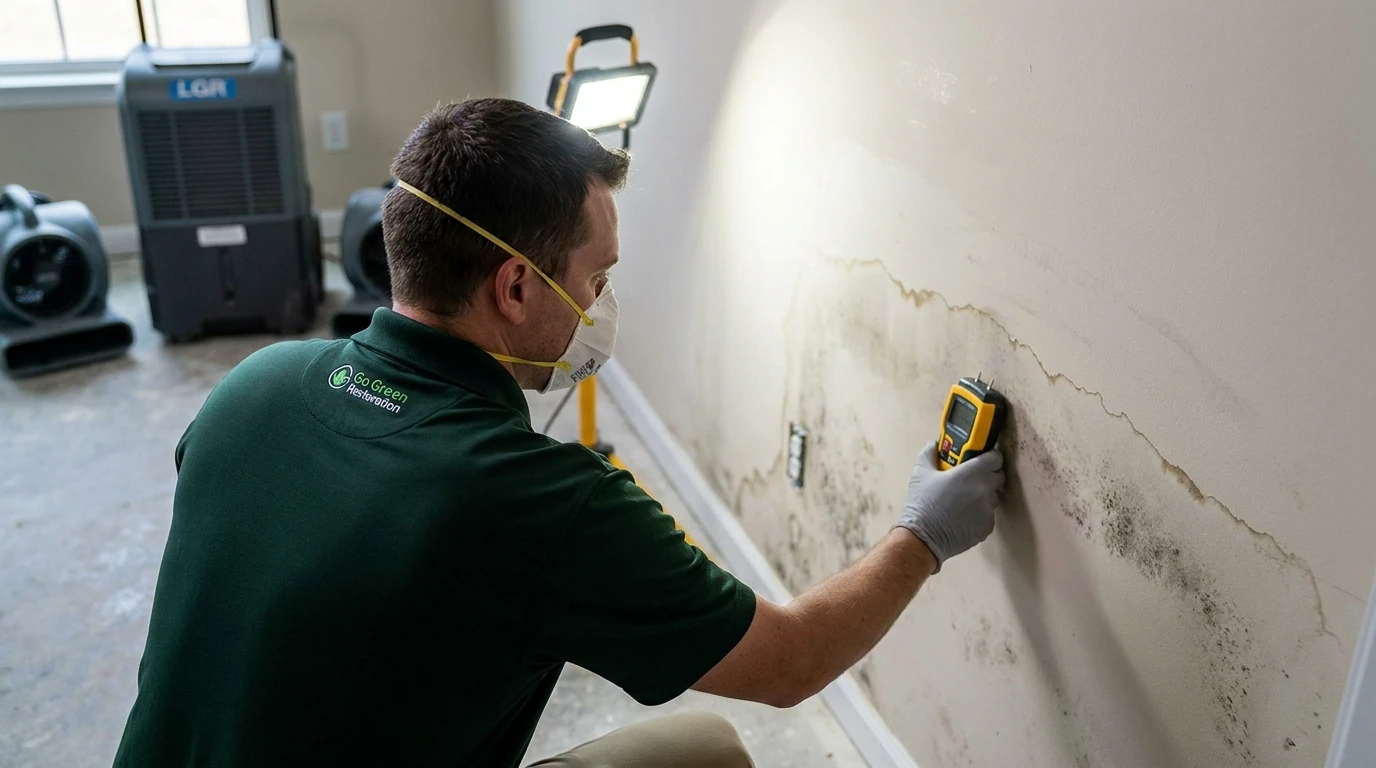
TL;DR: Mold can begin colonizing wet surfaces in as little as 24 to 48 hours after water damage, according to the EPA. Spores are already present in almost every home. Once they land on wet drywall, wood framing, or carpet padding, they need only moisture, warmth, and a surface to feed on. The 48-hour mark is not a safe deadline, it is the outer edge of the window where professional drying can reliably prevent growth. Act before it closes.
You just discovered water damage, a burst pipe, a slow leak behind the washing machine, a flooded bathroom. Your first question is probably about the water itself. But the clock on mold starts the moment moisture contacts a porous surface, and it runs faster than most homeowners expect. Here is what actually happens, hour by hour, and what you can do to interrupt it.
Can Mold Really Grow in 24 Hours?
Yes. Mold spores can begin germinating and establishing colonies on wet porous materials within 24 to 48 hours under the right conditions. This is not a worst-case estimate, it is the standard guidance from the EPA and the basis for the IICRC S500 standard, which governs how professional water damage restoration is performed. The 48-hour figure assumes average indoor temperatures and humidity. Warmer, more humid conditions can compress that window.
What the 24-48 hour figure means in practice: if water soaked into your drywall or subfloor on Monday morning and nobody addressed it until Wednesday, mold growth is likely already underway, even if you cannot see or smell it yet. Visible mold often does not appear until 3 to 7 days in. By then, the colony is already established.
What Affects How Fast Mold Grows?
Four factors determine whether mold shows up closer to the 24-hour mark or the 48-hour mark, or faster.
Temperature. Mold grows fastest between 77°F and 86°F. A home in late summer with the AC off after a flood is close to ideal for mold. Cooler temperatures slow germination but do not stop it.
Humidity. Mold needs relative humidity above roughly 60% at the surface level to sustain growth. In humid climates, the ambient air itself contributes moisture even after the visible water is removed. Drywall and wood can stay wet for days in a high-humidity environment without active drying equipment.
The material that got wet. Drywall, carpet, insulation, and wood framing are all porous and organic, ideal mold food. Concrete and tile are harder surfaces that resist colonization longer, but the grout lines and the materials behind them are still vulnerable.
How long the water sat. Category 1 water (clean water from a supply line) that is extracted within a few hours is a very different situation from Category 3 water, also called black water, meaning sewage or floodwater, that sat for 12 hours. The longer water sits, the deeper it penetrates, and the more surface area becomes hospitable to growth.
If you are still in the first few hours after discovering water damage, read our first 24-hour action guide, the steps you take right now matter more than anything else for mold prevention.
What Does Mold Growth Actually Look Like in the First Week?
Understanding the timeline helps you know what you are looking for and when to escalate.
Hours 1-24: Spores are present on wet surfaces and beginning to germinate. Nothing is visible yet. The surface may smell musty if you press your nose close, but most people would not notice anything unusual.
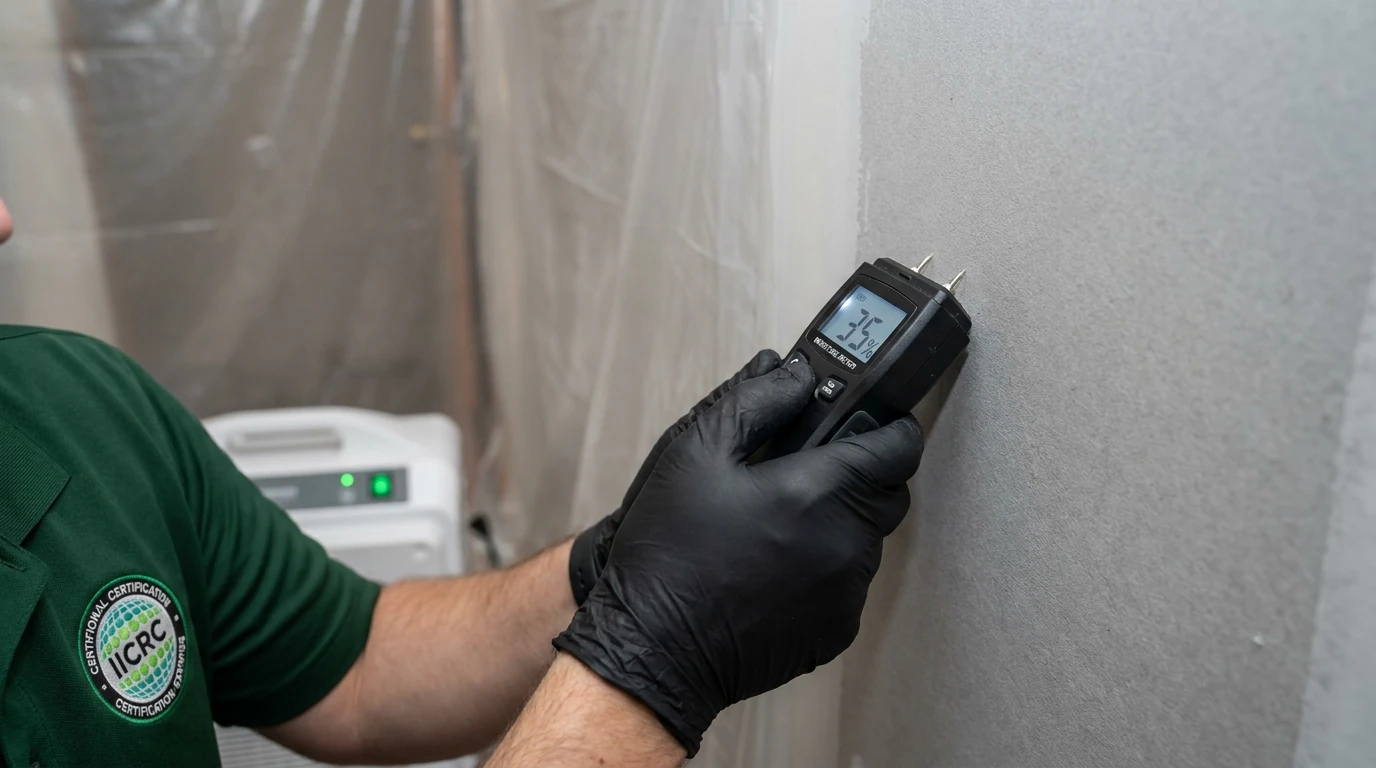
Hours 24-48: Early hyphal growth (the thread-like root structures of mold) is underway inside porous materials. Still not visible to the naked eye on the surface. This is the window where aggressive drying, air movers, LGR dehumidifiers, and moisture monitoring, can still interrupt the process before a colony establishes.
Days 3-5: Small visible spots may begin appearing, often gray, green, or black, depending on the species. A musty odor becomes noticeable in the room. At this stage, surface cleaning is not sufficient, the colony has roots inside the material.
Days 7-14: A visible colony is established. Spore counts in the air rise. At this point, remediation requires containment, removal of affected materials, and HEPA air filtration, not just drying.
For more on what a full remediation involves and how long it takes, see our post on how long water damage restoration actually takes.
How to Prevent Mold After Water Damage
Preventing mold after a water event comes down to one principle: remove the moisture before the 48-hour window closes. Here is what that looks like in practice.
Extract standing water immediately. Every hour of standing water increases penetration depth into flooring and framing. Wet-vacs work for small amounts; truck-mounted extractors are needed for significant flooding.
Deploy air movers and dehumidifiers, not just fans. Box fans move surface air but do not lower the dew point in the room. Professional LGR (low-grain refrigerant) dehumidifiers pull moisture out of the air and out of building materials. This is the difference between surface-dry and structurally dry.
Monitor moisture levels with a meter, not by touch. Drywall can feel dry to the touch while holding 20-30% moisture content inside, well above the threshold for mold growth. A calibrated moisture meter gives you an actual number. The IICRC S500 standard defines acceptable moisture content levels by material type; restoration crews use these targets to know when drying is complete.
Remove materials that cannot be dried in time. Wet drywall, carpet padding, and insulation often cannot be dried within 48 hours even with professional equipment. Removing them is faster and safer than attempting to dry them in place. This is a judgment call that depends on how long the water sat and how saturated the material is.
Control ambient humidity. Keep windows closed in humid weather. Running the HVAC system (if it was not affected by the water) helps maintain lower indoor humidity during the drying period.
If you have water in your crawl space specifically, the conditions there, low airflow, ground moisture, warm temperatures, make mold growth even faster. Our guide on water in the crawl space after heavy rain covers that scenario in detail.
What Should You Do If You Suspect Mold Already Started?
If it has been more than 48 hours since the water event, or if you can already see or smell mold, drying alone is not enough. At that point, you need a mold assessment before any remediation work begins.
A proper assessment involves air sampling and surface testing to identify the species and concentration of mold present, not just a visual inspection. This matters because some mold types require more aggressive containment protocols than others. Our post on how to test for mold explains the difference between DIY test kits and a professional inspection, and when each is appropriate.
If mold is confirmed, remediation follows a specific process: containment with poly sheeting and negative air pressure, removal of affected materials, HEPA vacuuming, antimicrobial treatment, and clearance testing after the work is complete. Skipping steps, especially clearance testing, leaves you without documentation that the problem was resolved, which matters for insurance and for resale.
Go Green Restoration of NC handles both water damage restoration and mold remediation across the Triangle, Rocky Mount, Wilson, and surrounding communities. If you are inside that 48-hour window and need equipment on-site, call (919) 906-5473, crews are available 24/7.
About Go Green Restoration of NC
Go Green Restoration of NC is an IICRC-certified restoration company based in Middlesex, NC, serving the Triangle region, Rocky Mount, Wilson, and surrounding communities around the clock. Their crews handle water damage restoration, mold remediation, crawl space encapsulation, fire damage restoration, air duct cleaning, carpet cleaning, and insulation removal and installation. For water and mold emergencies, reach them at (919) 906-5473.
Video Transcript
Water damage is stressful enough. But here’s what most homeowners don’t realize: mold can start growing in as little as 24 hours. Mold spores are already floating in your home right now. The moment they land on wet drywall, wood, or carpet, the clock starts. In the first 24 hours, nothing looks wrong. But inside porous materials, spores are already germinating. You won’t see or smell anything yet. By hour 48, thread-like mold roots are growing inside your walls. This is the last window where professional drying equipment can stop it. Four things speed mold up: warm temperatures, high humidity, porous materials like drywall or wood, and how long the water sat before anyone acted. By days three to five, you’ll see small gray or black spots and smell something musty. At that point, surface cleaning is not enough. Drywall can feel dry to the touch but hold dangerous moisture inside. Professionals use calibrated moisture meters to find what you can’t feel. Regular box fans aren’t enough. You need industrial dehumidifiers that pull moisture out of the air and out of building materials completely. Some materials like soaked carpet padding and insulation simply can’t dry fast enough. Removing them quickly is what protects your home long-term. The 48-hour window is real. Don’t wait. Call Go Green Restoration of NC at 919-906-5473 for a free estimate today.