
TL;DR: Attic and crawl space insulation removal and installation in Zebulon, NC typically involves pulling out old, damaged, or contaminated insulation, addressing any moisture or mold issues underneath, and installing fresh material rated for North Carolina’s mixed-humid climate. The work protects your home’s air quality, lowers energy bills, and stops moisture problems from getting worse. Most projects take one to two days depending on the size of the space and the condition of what’s being removed.
If your energy bills have crept up, your floors feel cold in winter, or you’ve noticed a musty smell coming from below the house, old or failing insulation is often the cause. Homes in Zebulon and the surrounding areas near Weavers Pond and Five County Stadium tend to sit on crawl spaces, and that crawl space insulation takes a beating from North Carolina’s humidity every summer. When insulation gets wet, it compresses, loses its R-value, and can become a food source for mold. At that point, patching isn’t enough. The old material needs to come out before anything new goes in.
What does attic and crawl space insulation removal actually involve?
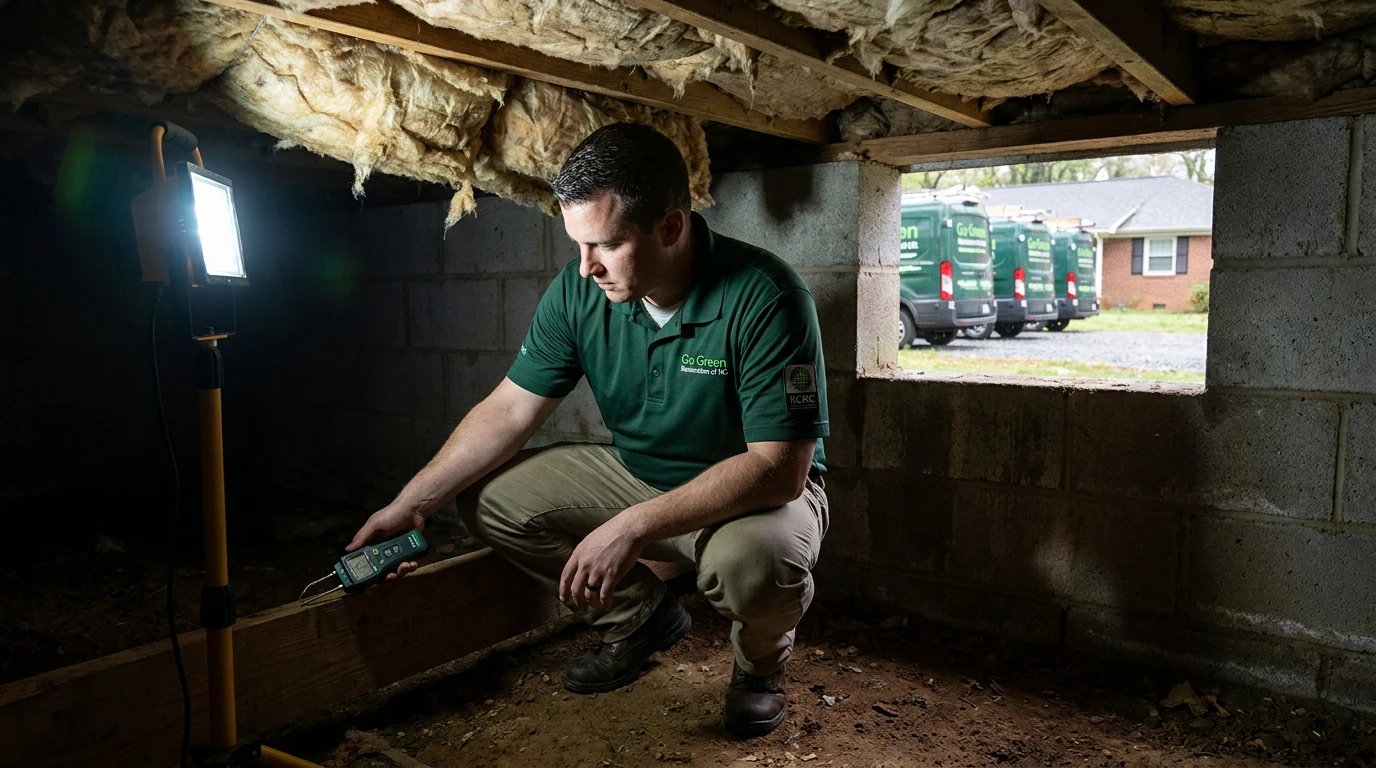
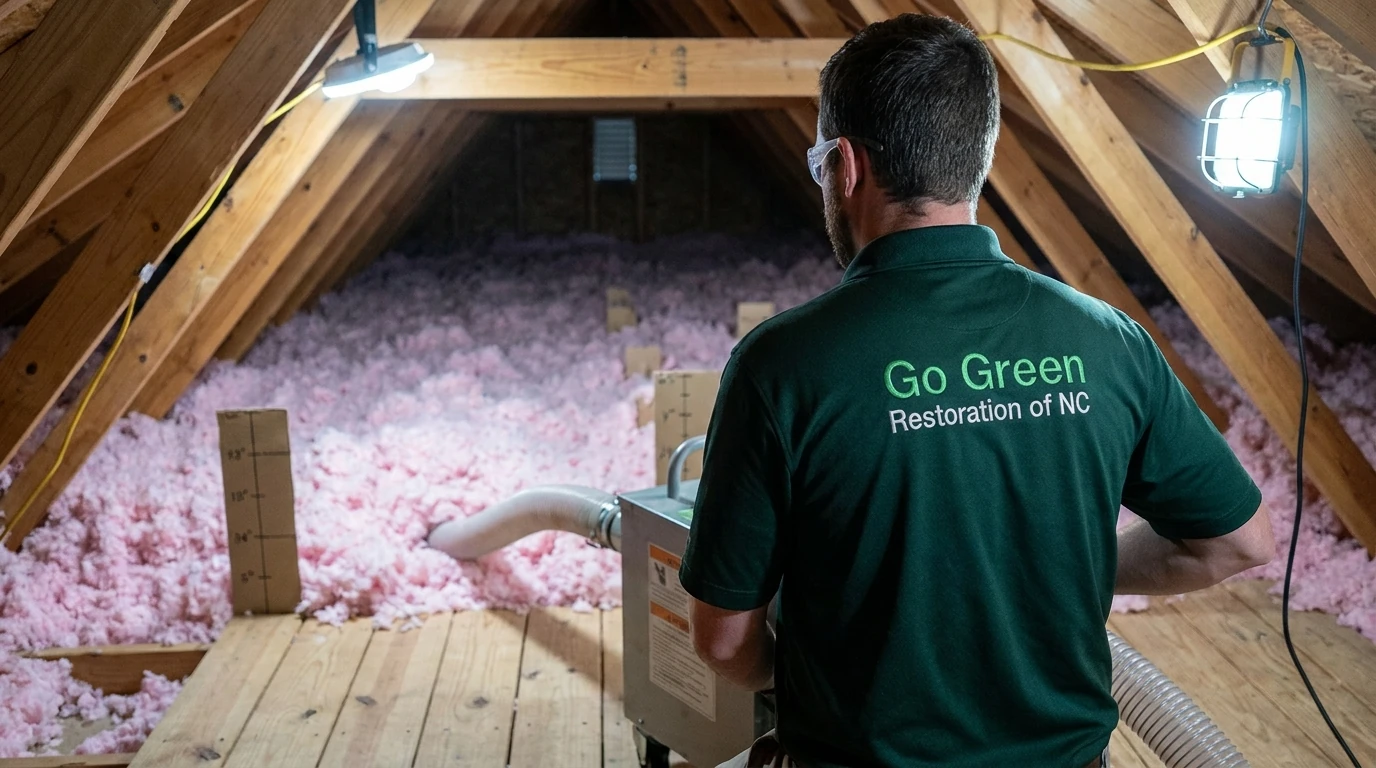
Insulation removal is a two-phase job: extract the old material safely, then prepare the surface for new installation. In an attic, that usually means vacuuming out blown-in fiberglass or cellulose with a commercial HEPA-rated insulation removal vacuum, then bagging and hauling the debris. In a crawl space, workers hand-remove batts stapled between floor joists, often working in tight quarters on their hands and knees.
The reason you can’t just blow new insulation over old is that the old material may be hiding problems. Rodent activity, moisture intrusion, and mold growth are all common findings once the old insulation comes out. In Zebulon’s rural-edge properties, rodent nesting in attic insulation is a frequent discovery. Contaminated insulation carries allergens, pathogens, and odors that new insulation will simply seal in if the substrate isn’t cleaned first.
After removal, the crew inspects the attic floor or crawl space joists for moisture damage, mold staining, or structural concerns. Any mold found at this stage should be addressed before new insulation goes in. If you’re seeing mold alongside insulation problems, the mold remediation step comes first.
What type of insulation is right for a North Carolina attic or crawl space?
The right insulation type depends on the space, your budget, and the existing air-sealing condition of the home. For North Carolina, the U.S. Department of Energy recommends attic insulation at R-38 to R-60 for the climate zones covering the Triangle and eastern NC.
Here are the most common options:
Blown-in fiberglass or cellulose (attics): The most common attic solution. Blown-in material settles into irregular spaces and reaches corners that batt insulation misses. Cellulose is made from recycled paper and treated for fire resistance. Fiberglass is inorganic and doesn’t support mold growth. Both work well in NC attics when installed at the correct depth.
Fiberglass batts (crawl spaces): Traditional batt insulation cut to fit between floor joists. It’s cost-effective but must stay dry to perform. In a crawl space that hasn’t been encapsulated, batts can absorb moisture and fall down within a few years. This is one of the most common reasons homeowners in Zebulon call for a removal-and-reinstall.
Spray foam (crawl space rim joists and attic air sealing): Closed-cell spray foam seals air gaps that batts can’t address. It’s often used at the rim joist in crawl spaces and around penetrations in attics before blown-in insulation goes on top. It’s more expensive per square foot but dramatically reduces air infiltration.
Rigid foam board: Used in specific applications, particularly on crawl space walls when the space is being converted to a conditioned environment as part of a full crawl space encapsulation project.
If your crawl space has a history of water intrusion, pairing new insulation with encapsulation is almost always worth the investment. Insulation alone won’t stop moisture from migrating through a dirt floor or unprotected foundation walls.
How do you know it’s time to replace your insulation?
Several signs point to insulation that’s past its useful life. Any one of these is worth a professional inspection:
- Visible moisture or water staining on existing batts or the attic floor sheathing
- Compressed or flattened batts in the crawl space, sagging away from the floor joists
- Pest evidence including droppings, nesting material, or chewed insulation
- Musty odors in the home, especially on the first floor above the crawl space
- Uneven heating and cooling or rooms that never reach the set temperature
- Ice dams forming on the roof edge in winter (a sign of heat escaping through a poorly insulated attic)
- Higher-than-normal energy bills without a clear explanation
In Zebulon’s older homes and rural properties on well systems, crawl space moisture is a chronic issue. If you’ve had water in your crawl space after heavy rain, the insulation below your floor joists likely absorbed some of that moisture even if it wasn’t visibly soaked.
What does the installation process look like, step by step?
A professional attic and crawl space insulation project follows a consistent sequence:
-
Inspection and measurement. The crew measures the space, checks existing R-values with a depth gauge or probe, documents moisture readings, and identifies any problem areas (mold, pest activity, air leaks).
-
Removal. Old insulation is extracted using commercial vacuums (attic) or by hand (crawl space). All debris is bagged and removed from the property. The space is left clean and ready for the next step.
-
Surface preparation. Joists, sheathing, or attic floor decking are inspected. Any mold or moisture damage is treated. Air sealing work happens at this stage: foam is applied around penetrations, wiring chases, and rim joists before new insulation covers them.
-
Installation. New insulation is installed to the specified R-value. In attics, blown-in material is distributed evenly using calibrated equipment that maintains consistent depth. In crawl spaces, new batts are cut to fit and secured, or spray foam is applied where appropriate.
-
Final inspection and documentation. Depth measurements confirm the installed R-value. Photos document the finished work. If the project is part of an insurance claim or energy-efficiency program, documentation is provided.
The whole process for a standard single-story home in Zebulon typically runs one to two days. Larger homes or projects that include mold remediation or encapsulation work will take longer.
Will insurance cover insulation removal and replacement?
It depends on why the insulation failed. Homeowners insurance generally covers insulation damage caused by a sudden, covered peril: a burst pipe that soaked the crawl space, storm damage that let water into the attic, or a rodent infestation that resulted from a covered event. Gradual moisture damage from an unsealed crawl space or a slow roof leak is usually excluded as a maintenance issue.
If the insulation damage is tied to a water damage event you’ve already filed a claim for, the insulation removal and replacement may be part of that claim’s scope. The key is documentation: moisture readings, photos of the damaged material, and a written scope of work before anything is removed. Go Green Restoration of NC provides that documentation as part of the project, which helps when you’re working with an adjuster.
For more on how insurance handles water-related damage, the plain-English guide to homeowners insurance and water damage covers what’s typically covered and what’s not.
What should you do next if you think your insulation needs to be replaced?
Start with an inspection, not a guess. The condition of insulation in an attic or crawl space is hard to assess without getting eyes on it. A professional inspection will tell you whether you need full removal and replacement, targeted repairs, or just an air-sealing upgrade before adding more material on top.
If you’re in Zebulon or the surrounding communities in Wake County, Go Green Restoration of NC can schedule a crawl space and attic assessment. The inspection covers insulation condition, moisture levels, and any signs of mold or pest activity. From there, you get a written scope before any work begins.
Call (919) 906-5473 to schedule an assessment, or reach out through the contact page.
About Go Green Restoration of NC
Go Green Restoration of NC is an IICRC-certified restoration and remediation company serving Zebulon, Middlesex, Raleigh, Wake Forest, and communities across eastern North Carolina. Their services include insulation removal and installation, crawl space encapsulation, mold remediation, water damage restoration, air duct cleaning, and carpet cleaning. The team is available 24/7 and provides written scopes before work begins on every project.
Video Transcript
If your energy bills keep climbing or your floors feel cold in winter, your attic or crawl space insulation could be the problem. North Carolina’s humidity is brutal on insulation. Every summer, moisture soaks in, compresses the material, and kills its ability to keep your home comfortable. When insulation gets wet, it can grow mold and harbor rodents. Patching over it just seals those problems inside your home. Removal comes first. In attics, crews use HEPA vacuums to extract old blown-in material safely. In crawl spaces, batts are pulled out by hand. Once the old insulation is out, the crew inspects for mold, moisture damage, and structural concerns before anything new goes in. For attics, blown-in fiberglass or cellulose is the top choice. It fills every corner and reaches R-38 to R-60, which is what North Carolina homes need. In crawl spaces, fiberglass batts go between the floor joists. Spray foam seals rim joists where cold air sneaks in most. If your crawl space has a history of water, pairing new insulation with encapsulation is the smart move to stop moisture for good. Signs you need insulation replaced: musty smells, cold floors, high energy bills, pest evidence, or visible sagging in the crawl space. Most projects finish in one to two days. Call Go Green Restoration of NC at (919) 906-5473 for a free estimate.