
TL;DR: HVAC cleaning in Wilson, NC removes accumulated dust, debris, mold spores, and contaminants from your air ducts, registers, and system components. Most homes benefit from professional cleaning every 3 to 5 years, though Wilson’s humid summers can push that timeline shorter if moisture has entered the ductwork. A full cleaning improves air quality, reduces allergen load, and helps your system run more efficiently. If you smell musty air when the system kicks on, that’s a sign to call sooner.
If you’ve noticed a musty odor every time your air conditioner turns on, or your family is sneezing more than usual despite clean filters, your ductwork may be the source. Wilson’s combination of older historic homes near Downtown Wilson and newer subdivisions off Buckhorn Reservoir Road creates two distinct HVAC challenges: aging duct systems that collect decades of debris, and newer builds where construction dust never got fully cleared before move-in. Either way, what’s inside those ducts circulates through every room in your home every time the system runs.
What Does HVAC Cleaning Actually Include?
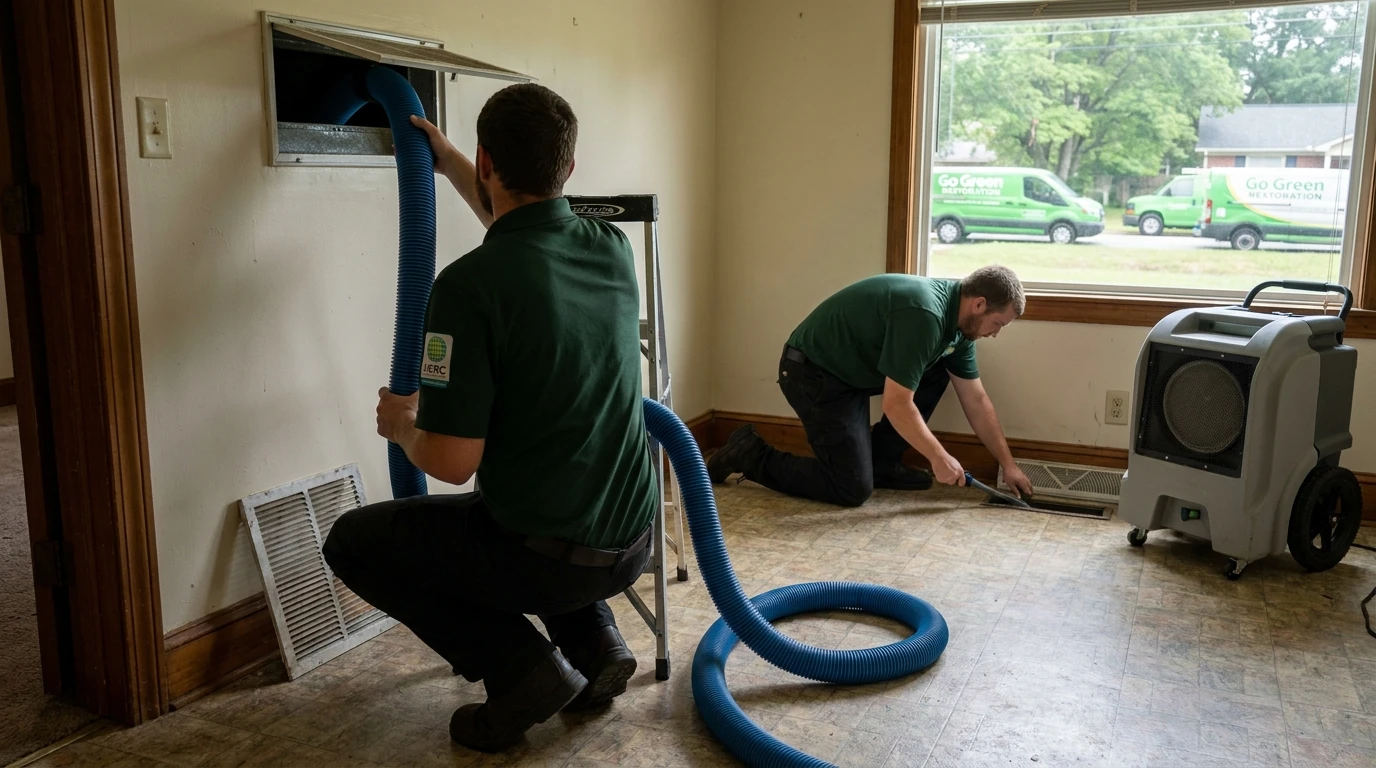
Professional HVAC cleaning covers the full air distribution system, not just the vents you can see. A complete service addresses supply and return air ducts, registers and grilles, the air handler unit, evaporator coils, drain pans, and the blower motor housing. Technicians use a combination of negative-pressure equipment (a powerful vacuum that puts the duct system under suction) and rotary agitation brushes to dislodge and capture debris without releasing it into your living space.
The EPA’s guidance on indoor air quality notes that duct cleaning is warranted when there is visible mold growth inside the ducts, ducts are infested with vermin, or ducts are clogged with excessive debris. In practice, Wilson homeowners often discover mold in ductwork after a water intrusion event or after running the system through a particularly humid summer without adequate dehumidification.
A reputable technician will also inspect the system during cleaning. If they find mold growth on the evaporator coil or inside the air handler, that’s a separate remediation issue, not something a standard duct cleaning resolves on its own. Mold on cooling coils requires antimicrobial treatment and addressing the underlying moisture source.
When Should You Schedule HVAC Cleaning in Wilson, NC?
The NADCA (National Air Duct Cleaners Association) recommends inspection every year and cleaning when the system is visibly contaminated. For most Wilson homes, cleaning every 3 to 5 years is a reasonable baseline. Move that up if any of these apply:
- You’ve had water damage near or affecting the HVAC system
- The home sat vacant for an extended period with the system off
- You recently completed a renovation (drywall dust and insulation fibers migrate into ductwork fast)
- A family member has asthma, allergies, or a compromised immune system
- You notice visible dust blowing from registers when the system starts
- The home smells musty or stale when the AC or heat runs
Wilson’s summers run hot and humid, with relative humidity regularly exceeding 70 percent from June through September. When an HVAC system is undersized, improperly sealed, or has leaky ductwork, that humidity can condense inside the ducts and create conditions where mold can establish. If you’ve had a mold issue in a crawl space or attic, there’s a reasonable chance the ductwork passing through those spaces has been exposed too. Crawl space encapsulation and duct cleaning often go together for Wilson homes with moisture histories.
What Happens During a Professional HVAC Cleaning?
A professional HVAC cleaning follows a defined process. Here’s what to expect from start to finish:
-
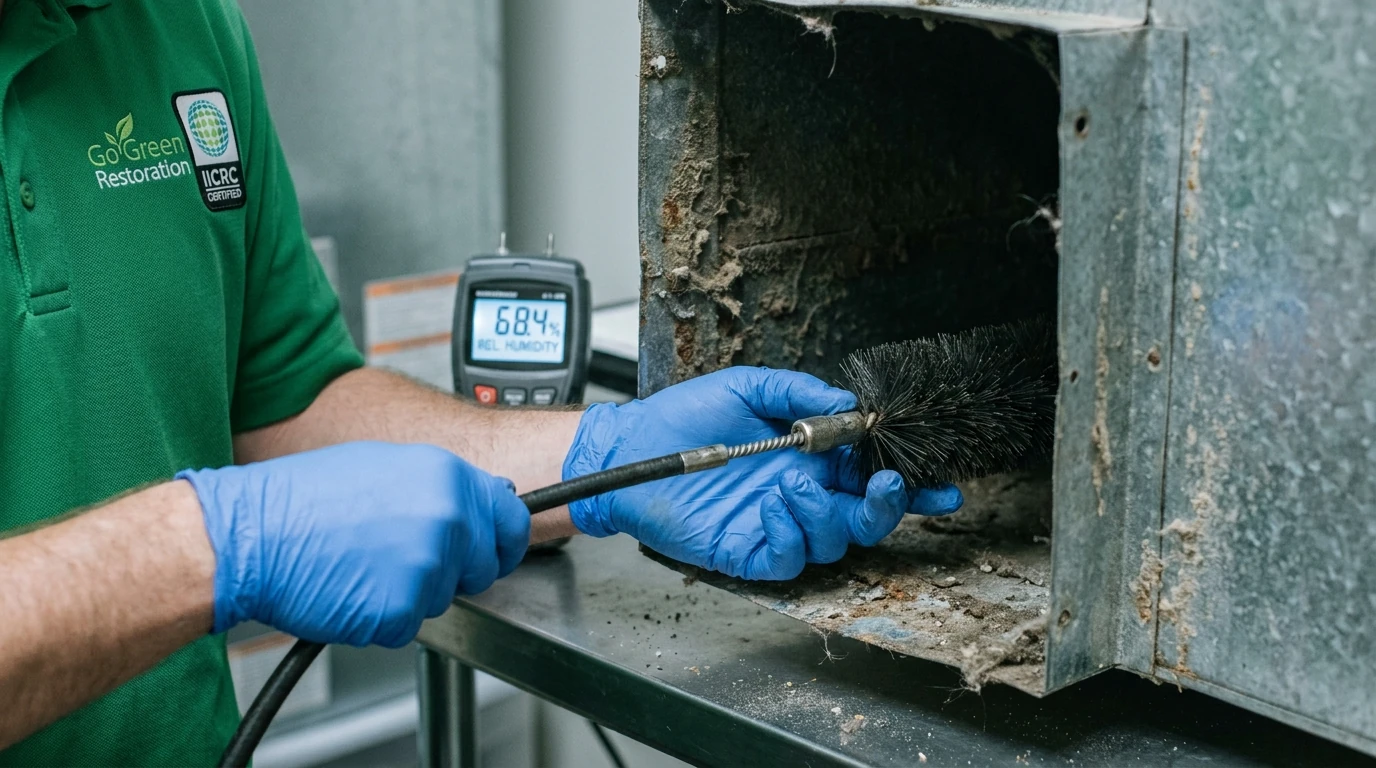
System inspection. The technician inspects accessible ductwork, registers, and the air handler before starting. They’re looking for visible mold, pest evidence, disconnected duct sections, and the general condition of insulation inside the ducts.
-
Containment setup. Supply and return registers are covered or connected to the vacuum collection system. This keeps debris from escaping into the living space during agitation.
-
Negative pressure. A truck-mounted or portable high-powered vacuum unit connects to the main trunk line and puts the entire duct system under negative pressure. This is the foundation of the process.
-
Agitation. Rotary brushes, compressed air whips, or pneumatic tools travel through each duct run to dislodge stuck debris. The negative pressure captures it as it releases.
-
Register and grille cleaning. Each supply and return register is removed, cleaned, and reinstalled.
-
Air handler cleaning. The blower compartment, evaporator coil, and drain pan are cleaned and inspected. A dirty drain pan is a common source of musty odors and can overflow if the drain line is partially blocked.
-
Final inspection and filter replacement. The technician does a post-cleaning walkthrough, replaces the air filter, and documents what was found.
The whole process typically takes 3 to 5 hours for a standard single-family home, depending on the number of vents and the condition of the system.
Does HVAC Cleaning Help with Mold and Air Quality?
HVAC cleaning removes existing contamination from the duct system, but it does not prevent mold from returning if the underlying moisture problem isn’t fixed. This distinction matters. If mold is present in your ductwork, cleaning removes the visible growth and spore load, but mold will re-establish within weeks if humidity levels inside the ducts stay elevated.
For Wilson homes where mold has been confirmed in the ductwork, a proper scope of work includes cleaning plus an antimicrobial application to duct surfaces, plus addressing whatever allowed moisture in. That might mean sealing leaky duct joints, improving attic ventilation, encapsulating the crawl space, or servicing the HVAC system itself to ensure the coil is draining properly.
If you’ve already had mold remediation done in another part of the home, ask whether the ductwork was inspected as part of that scope. Mold spores travel through air, and an active mold colony in a crawl space or attic can seed ductwork that passes through those spaces. The two issues are connected.
For homes near Barton College or in the West Nash area with older duct systems, it’s also worth having the duct insulation inspected. Fiberglass duct liner that has gotten wet loses its insulating value, traps debris, and can harbor mold in a way that’s difficult to clean. In those cases, duct liner removal and replacement is the more complete solution than cleaning alone.
What Should You Ask Before Hiring an HVAC Cleaning Company?
Not all HVAC cleaning services are equal. Before you hire, ask these questions:
- Do you use negative-pressure equipment? Source-removal cleaning with a vacuum collection system is the industry standard. “Blow-and-go” services that just blow compressed air through ducts without capturing the debris don’t clean the system, they redistribute the contamination.
- Will you inspect the air handler and coil, or just the ducts? A complete service covers the whole system.
- Do you document what you find? Before-and-after photos of the duct interior and air handler condition give you something to reference and are useful for insurance purposes if the contamination is related to a covered loss.
- Are you NADCA-certified? NADCA certification indicates training in the ACR (Assessment, Cleaning, and Restoration) standard for HVAC systems.
- What happens if you find mold? A company that just keeps cleaning without flagging mold for remediation is doing you a disservice. Mold in ductwork requires a different protocol than routine cleaning.
If the cleaning company finds mold during the inspection, that’s the point where a restoration company with mold remediation capabilities becomes part of the conversation. Go Green Restoration of NC handles mold remediation and air duct cleaning for Wilson-area homes, so the inspection and remediation can be scoped together rather than coordinated between two separate contractors.
For homes that also have insulation issues in the attic or crawl space, combining that work with duct cleaning is often more efficient and ensures the whole system is addressed in one mobilization.
If you’re not sure whether your system needs cleaning or just an inspection, a moisture assessment is a good starting point. It identifies whether humidity levels in the ductwork are elevated and whether any mold growth is present before you commit to a full cleaning scope. Call Go Green Restoration of NC at (919) 906-5473 to schedule an assessment for your Wilson home.
About Go Green Restoration of NC
Go Green Restoration of NC is a 24/7 restoration company serving Wilson, NC and surrounding communities across the Triangle and eastern North Carolina. Their team handles air duct cleaning, mold remediation, water damage restoration, crawl space encapsulation, insulation removal and installation, fire damage restoration, odor removal, carpet cleaning, and biohazard cleanup. Reachable at (919) 906-5473.